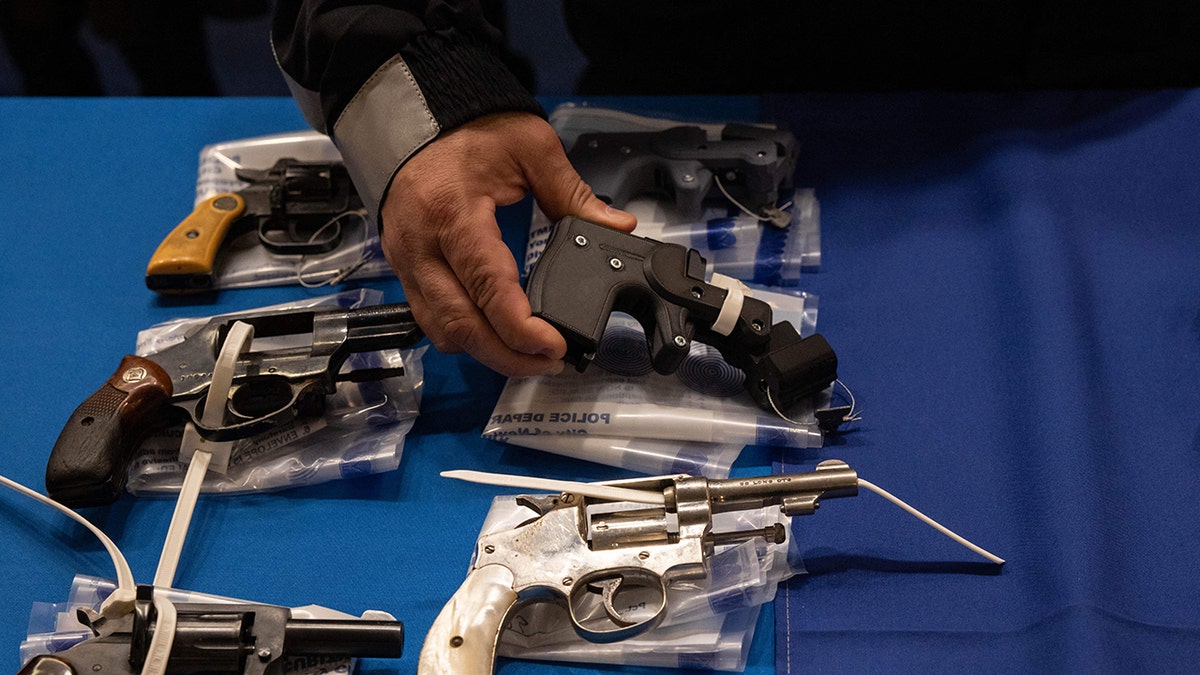
Supreme Court Decision and Its Ramifications for Ghost Guns
On March 26, 2025, the U.S. Supreme Court upheld the Biden administration’s new regulation regarding ghost guns, marking a pivotal moment in the ongoing national debate over firearm regulation. This decision mandates that companies selling ghost gun kits online must now include serial numbers, carry out background checks, and verify that buyers are at least 21 years old. In doing so, the Court has taken a clear stance on a subject that has long been under scrutiny, especially given the rapid increase in these nearly untraceable weapons at crime scenes nationwide.
The regulation has its roots in the fact that ghost guns—firearms that lack the serial numbers that enable law enforcement to track them—had been implicated in a series of high-profile crimes, ranging from mass shootings to assassinations. With their numbers rising from fewer than 1,700 in 2017 to over 27,000 by 2023, government data painted a convincing picture that the absence of serial numbers, combined with the ease of online purchases, was a reckless mix that left public safety at risk.
The Legal Context: Understanding the New Ghost Gun Regulation
This new rule, finalized under the direction of then-President Joe Biden, requires manufacturers to treat ghost gun kits like conventional firearms. That means every kit must include a serial number so that if a ghost gun is later used in a crime, law enforcement can trace it back to its source. Furthermore, companies must now run thorough background checks and confirm that purchasers are legally eligible to own a firearm.
Critics of the regulation, including several prominent gun groups, contended that the Bureau of Alcohol, Tobacco, Firearms and Explosives (ATF) was overstepping its authority. They argued that most crimes are committed with traditional firearms and claimed that additional regulations would unnecessarily burden law-abiding citizens without addressing the fine points of criminal activity. However, defenders of the rule argue that every measure that can help reduce the availability of untraceable weapons is essential in keeping communities safe.
Examining the Ghost Gun Regulation: What It Means for Law Enforcement
One of the key aspects of this regulation is its potential to assist law enforcement in solving crimes. By requiring manufacturers to add serial numbers to all ghost gun kits, authorities now have a tangible way to track these weapons after they appear at crime scenes. In doing so, the regulation aims to simplify several of the tricky parts of investigations involving firearms reconstructed in private homes or printed using 3D printers.
How Serial Numbers Enhance Traceability
Serial numbers serve as a unique identifier for each firearm, making it easier for the police to piece together clues when a weapon is recovered after a crime. Prior to this rule, ghost guns offered criminals a convenient way to elude detection. The absence of a serial number meant that even after a gun was retrieved from a suspect, linking it to other crimes or tracking its origin was an overwhelming task riddled with tension.
With the new regulation in place, law enforcement now has a way to:
- Track the production and distribution of ghost gun components.
- Establish a record for every kit sold online.
- Create investigative leads when ghost guns appear at crime scenes.
Here is a table summarizing the legal requirements established by the regulation:
| Requirement | Description |
|---|---|
| Serial Numbers | All ghost gun kits sold online must include a unique serial number. |
| Background Checks | Companies must process background checks for every buyer. |
| Age Verification | Buyers must be verified as 21 years or older before purchase. |
These measures are designed to help police find their way through the tangled issues that have made tracing ghost guns such a nerve-racking problem in the past.
Addressing the Growth of 3D-Printed and Privately Assembled Firearms
Another complicated piece of this debate centers on the evolution of firearm manufacturing. Modern technology has allowed individuals to either assemble ghost guns from kits available online or to create gun parts using 3D printing. With these methods, criminals can typically bypass many traditional checkpoints that would normally prevent a firearm from being easily traced.
Critics worry that the regulation may not fully close the gaps in regulating 3D-printed guns. Yet, the inclusion of serial numbers shifts some of the responsibility to manufacturers and online vendors, ensuring that every kit or set of components is subject to oversight. In practice, this means that:
- Individuals can no longer piece together a ghost gun without leaving a documented trail.
- Online transactions for gun kits are now more transparent.
- Law enforcement is better equipped to identify patterns in the distribution of components.
Even with these improvements, the implementation details remain a bit of a mixed bag. Some experts point to the need for further refinement in how the digital sale platforms manage and store information about each transaction. There remains a need to figure a path that balances innovation with public safety in the rapidly evolving domain of 3D-print technology.
Legal Battles and the Debate Over Gun Regulation
The ghost gun regulation was challenged in a lawsuit known as Garland v. VanDerStok. Gun advocacy groups argued that this new rule was both intimidating for businesses and off-putting for law-abiding citizens, claiming that the regulation tackled only a small fraction of the overall issue of firearm violence.
Opponents maintained that most crimes involve traditionally manufactured firearms, not these kit-based products. They contended that the rule was an example of regulatory overreach and that it failed to take into account the little details that affect responsible gun owners. Nonetheless, the Supreme Court’s decision to let the regulation stand, at least while the legal proceedings continue, suggests that the judiciary sees the need for modernizing legal frameworks in response to new technologies.
Arguments from Gun Groups Versus Government Strategies
Gun groups have presented several points against the regulation, including:
- The claim that enforcing serial number requirements on ghost guns is an onerous and confusing bit for small businesses.
- The argument that the regulation places undue burdens on individuals who legally use ghost gun kits for self-defense or sporting purposes.
- Concerns that criminal elements could still exploit loopholes, thus rendering the regulation less effective than intended.
On the other side of the debate, proponents of the rule highlight that:
- The regulation is a critical step in reducing the number of untraceable firearms on the streets.
- Adding serial numbers to ghost gun kits can significantly help police solve crimes and connect different cases that might otherwise remain disconnected.
- Systematic background checks ensure that the process of purchasing a gun kit is scrutinized, potentially deterring individuals who might be planning to commit crimes.
While both sides have valid points, the overall public sentiment seems to lean toward the idea that any step that helps untangle the maze of gun-related issues is welcome—even if the process may involve some nerve-racking adjustments along the way.
Impact on High-Profile Crimes and Public Safety
There have been notable instances where ghost guns played a role in serious crimes. For example, an AR-15-style ghost gun was used in a mass shooting in Philadelphia, one that tragically claimed several lives. There is also speculation that a ghost gun, potentially assembled using a 3D printer, was involved in the high-profile killing of UnitedHealthcare’s CEO in Manhattan.
These cases have further fueled the debate on whether more stringent regulations on ghost guns can effectively decrease violent crime rates. Law enforcement officials have observed that in several major cities—New York, Los Angeles, Philadelphia, and Baltimore—the numbers of ghost guns have begun to either plateau or drop. According to the Justice Department, manufacturing of miscellaneous gun parts decreased overall by 36% after the regulation took effect.
Such statistics provide a hopeful indication that the new rules might lead to a powerful reduction in the number of guns used in violent contexts. However, the process of enforcing the regulation remains challenging, especially when it comes to ensuring that online vendors adhere strictly to the law.
Online Sales and the Regulation of Ghost Gun Kits
The digital marketplace plays a critical role in the distribution of ghost gun kits. In recent years, websites that cater to these private builders have grown in number, offering everything needed to assemble a weapon in less than 30 minutes. This has turned the online sale of gun parts into a lively but controversial industry.
Ensuring Compliance in the Online Marketplace
One of the more tangled issues in this context is ensuring that online vendors comply with the new federal mandate. The regulation forces these companies to not only attach serial numbers but also verify the eligibility of buyers. This introduces several catches for e-commerce operations, including:
- Updating inventory systems to incorporate serial number tracking for every ghost gun kit.
- Integrating robust background check systems into the sales process.
- Ensuring that age verification is conducted properly at the point of sale.
For many small businesses, these requirements might seem intimidating at first. However, proponents point out that modern technology can help streamline these processes. Automated background check systems, secure online payment gateways, and efficient customer verification protocols are just a few examples of how the industry is starting to figure a path through these new requirements.
Table: Comparison of Pre- and Post-Regulation Practices
| Aspect | Before Regulation | After Regulation |
|---|---|---|
| Serial Numbers | Often absent, making traceability difficult | Mandatory inclusion on all ghost gun kits |
| Background Checks | Inconsistent; many sales conducted without proper checks | Required for every sale, ensuring purchaser eligibility |
| Age Verification | Often neglected in online transactions | Strict verification to ensure buyers are 21 or older |
This side-by-side comparison clearly illustrates how the new rules are shifting the landscape in the online sale of ghost gun kits, hopefully reducing the problematic availability of untraceable firearms.
The Broader Implications for Gun Regulation and Community Safety
The Supreme Court’s decision is more than just a legal ruling—it is a signal to other policymakers that modern firearm production methods require modern regulation. The decision may well be a precursor to future changes aimed at addressing other thorny issues in the realm of gun control, from the sale of accessories that enable rapid firing to the distribution of parts that can be easily reassembled into functioning guns.
From a broader perspective, this regulation has managed its way into the discussion on how to balance the rights of constitutional gun owners with the need to ensure public safety. There is an ongoing debate about whether such regulations adequately address all the small distinctions that exist in the second amendment debate, or whether they mostly serve as a symbolic gesture that might require further follow-up actions.
Balancing Constitutional Rights and Public Safety
Supporters of firearm rights argue that while some measures are super important for public safety, they must be applied in a way that does not overly restrict law-abiding citizens. The current regulation, for example, has not outlawed ghost guns altogether—it merely requires that ghost gun kits be treated like any other firearm with all the accompanying checks. This approach represents a middle-ground that seeks to address the hidden complexities of firearm tracking without infringing on individual rights.
On the other hand, advocates for stricter gun control claim that the rapid increase in ghost gun usage in crimes is a sign that regulators need to step in decisively. They believe that by taking the wheel on regulating these kits, the federal government is sending an important message: every weapon used in the commission of a crime must be traceable, and no criminal should be allowed to exploit the digital marketplace as a loophole.
Both sides of the debate agree on one point: the stakes are high. With lives hanging in the balance, even the smallest twist or turn in policy can have profound implications for how safely communities can manage the shadowy marketplace of ghost guns.
Building a Safe Environment Through Regulation
In neighborhoods across the country, calls for greater safety measures have grown louder. Community leaders, law enforcement agencies, and concerned citizens are urging lawmakers to support additional steps that can reinforce this new regulation and further strengthen community safety. Some practical ideas being discussed include:
- Increased funding for forensic technology that helps track gun parts.
- Enhanced training programs for law enforcement to effectively work through online data related to ghost gun sales.
- Better public education on how to report illegal sales and suspicious activity online.
These proposals, if implemented properly, could go a long way in ensuring that the benefits of the new regulation are fully realized. They would help not only in reducing the number of untraceable weapons circulating in the United States, but also in restoring public trust in the ability of government institutions to take action against crime.
Future Directions: Tackling the Evolving Landscape of Ghost Guns
Looking ahead, the regulation is likely to prompt further changes in both industry practices and legal frameworks. As technology continues to advance, we can expect even more sophisticated ways to produce both conventional and 3D-printed firearms. Hence, the current regulation might be just the beginning of a broader initiative aimed at making the firearm industry more transparent and accountable.
One of the most nerve-racking challenges for policymakers will be to ensure that regulations keep pace with innovation. As manufacturers develop new methods for producing firearm components, regulators must be prepared to adapt quickly. This means that when new tactics or techniques emerge from the realm of 3D printing or online sales, lawmakers will need to take a closer look and potentially update the rules to cover these developments.
Implementing Future Changes: Challenges and Considerations
The path forward is full of complicated pieces that policymakers, law enforcement, and the tech industry must work through collectively. Some of the challenges that remain include:
- Ensuring that all online vendors comply with updated regulations, even as new technologies are introduced.
- Balancing rapid technological advances with systematic, step-by-step enforcement of gun laws.
- Developing new forensic techniques that can keep up with the stealthy nature of modern ghost gun production.
These challenges highlight the need for continuous dialogue between lawmakers and technology experts. Only by taking the time to poke around these issues—dig into the fine points and the nitty-gritty of each emerging technology—can we hope to build a regulatory framework that is both flexible and robust.
Charting a Course for Safer Communities
From an opinion standpoint, the decision to uphold the ghost gun regulation is a significant victory in a debate that has long been loaded with tension. It signals a willingness on the part of the judicial branch to engage with the small distinctions and subtle parts of modern firearm manufacturing in a way that aligns with both technological progress and public safety objectives.
Looking forward, we might expect further improvements, such as:
- Better inter-agency cooperation between federal, state, and local law enforcement units.
- Enhanced databases that connect ghost gun serial numbers with specific manufacturers and sellers.
- Regular reviews and updates of the regulations to match emerging trends in firearm production and digital sales.
Ultimately, the objective is clear: to ensure that every weapon, regardless of its origin, can be tracked if it’s used in a crime. Achieving this goal will require a concerted effort from multiple stakeholders, including lawmakers, tech companies, and the law-abiding citizens who form the backbone of our communities.
Community Impact and the Way Forward
The ripple effect of the Supreme Court’s decision extends far beyond courtroom debates and legislative halls. In communities across the country, there is now a fresh focus on how public safety can be enhanced by working through the complicated landscape of gun control, modern technology, and individual rights.
Residents in affected areas have expressed both relief and cautious optimism. While many applaud the regulation as a key step toward reducing the availability of ghost guns, others remain concerned about the nerve-wracking possibility of criminals finding clever workarounds to existing laws.
Public Reactions and Community Initiatives
In neighborhoods where violent crimes have previously been linked to ghost guns, local leaders are taking proactive steps. Community initiatives are being launched to educate citizens on how to recognize suspicious online activity and how to report concerns about illegal firearm sales. Workshops, public forums, and collaborative programs between community organizations and law enforcement are all part of this comprehensive approach.
Here are a few examples of how communities are getting involved:
- Public Education Campaigns: Informational sessions designed to break down the twists and turns of the new regulations, highlighting how serial number tracking and background checks work.
- Collaborative Task Forces: Joint initiatives between local police and community representatives aimed at monitoring online platforms for illegal ghost gun sales.
- Technology Workshops: Training sessions that demystify digital sales processes and explain how proper age verification and background checks are being enforced.
These community-led efforts provide an essential complement to federal regulation. They serve as a reminder that while legal frameworks are necessary, it is the active participation of the public that truly molds a safer environment.
Long-Term Goals for Community Safety and Gun Regulation
In the long run, the goal is to create an ecosystem where every piece of a firearm’s production—from manufacture to sale—can be easily traced. This requires not only strict rules and better technological tools but also a culture of accountability shared by both sellers and buyers. Some long-term objectives include:
- Developing centralized databases that compile data on ghost gun kits, making it easier for law enforcement to spot trends and red flags.
- Ensuring continual technological upgrades that streamline digital sales monitoring and age verification processes.
- Fostering a community dialogue that remains open, honest, and focused on the common goal of safer neighborhoods.
By working through these aims, policymakers can create a future where the measure of a gun’s safety isn’t just about its appearance or ease of purchase, but also about the traceable, responsible manner in which it is sold and used.
Conclusion: A Step Toward a More Transparent Future
In conclusion, the Supreme Court’s decision to uphold the Biden administration’s ghost gun regulation is a watershed moment in the national debate over gun control policy. While the ruling may not resolve all the tricky parts and tangled issues involved in regulating modern firearms, it does provide a clear framework for dealing with one of the most significant problems of our times: the increasing prevalence of untraceable ghost guns.
The new rules, focused on mandating serial numbers, comprehensive background checks, and strict age verification, hold promise in making it harder for criminals to exploit loopholes. By requiring online sales outlets to adhere to these standards, the regulation is setting an essential precedent for further changes in the future. The enhanced traceability offered by serial numbers, combined with robust digital verification processes, means that law enforcement can now more easily figure a path through cases that were once almost impossible to untangle.
Looking ahead, the challenge will be to keep pace with technological advancements in 3D printing and online commerce. As this field continues to evolve, regulators, law enforcement, and communities alike will need to stay alert and flexible. By engaging in continual dialogue, investing in new tracking technologies, and reinforcing public education efforts, society can work toward a more transparent and accountable framework for firearm regulation.
Though the road ahead is full of overwhelming twists and nerve-racking challenges, the decision to enforce stricter control over ghost guns is a decisive step in the right direction. It reflects an enduring commitment to maintaining public safety while respecting the rights established by our Constitution. In balancing innovation with oversight, this regulation may even serve as a model for addressing other emerging issues in a decades-long struggle to keep our communities safe.
Ultimately, the Supreme Court’s ruling is not just a legal verdict—it is a call to all stakeholders to work together, to dig into the fine points of technology, law, and societal expectations, and to take meaningful steps toward a future where the intent and impact of gun ownership and manufacturing are clearly defined and responsibly managed.
With the stakes as high as they are, these measures are more than just regulatory steps: they are a must-have tool in the ongoing effort to protect public safety in an era where the digital and physical worlds are becoming increasingly intertwined.
As the national dialogue continues, one thing is clear: the efforts to add accountability to ghost gun sales are an essential part of a broader mission to ensure that every individual life is safeguarded through thoughtful, informed policy-making. In an age where innovation and danger can sometimes dance hand-in-hand, it is the work of legal, technological, and community leaders to ensure that the balance tips toward a safer, more transparent future for all.
Originally Post From https://www.kbzk.com/politics/supreme-court/supreme-court-upholds-biden-rule-requiring-serial-numbers-background-checks-for-ghost-guns
Read more about this topic at
Supreme Court upholds regulation on “ghost guns”
Supreme Court upholds federal regulation banning ‘ghost …