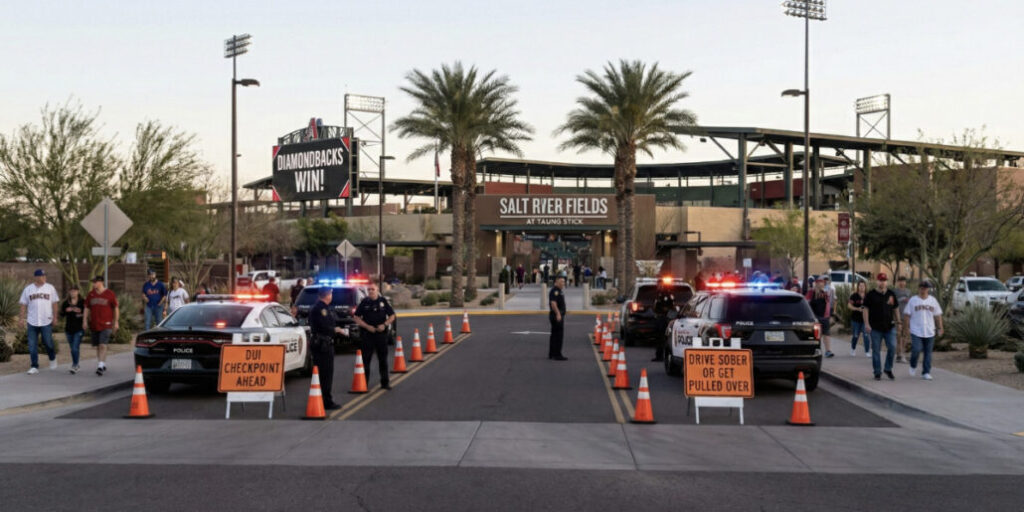
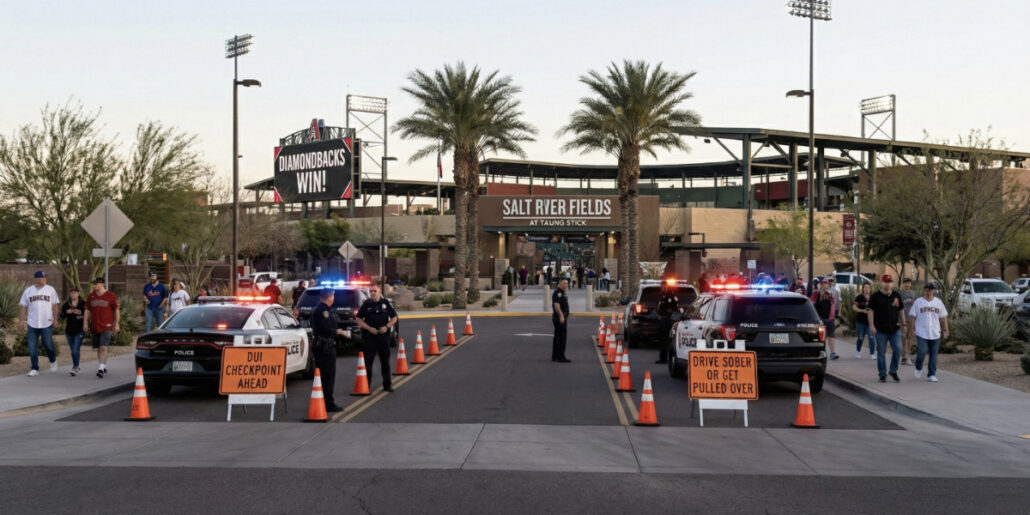
Arizona DUI Checkpoints Amid Major Sporting Events: A Closer Look
The legal landscape surrounding DUI checkpoints in Arizona is full of tricky parts and tangled issues that many drivers find both overwhelming and confusing. As a legal professional with years of experience in DUI defense in cities like Glendale, Phoenix, Scottsdale, and Tempe, I have seen firsthand how checkpoints set up during major sports events can turn into nerve-racking encounters for drivers. In this opinion editorial, I will take a closer look into the key legal issues, exploring the twists and turns of DUI checkpoint operations and the essential rights you have as a driver—no matter what your destination may be.
Checkpoints are legal in Arizona, but their operation is loaded with detailed requirements and must adhere to strict constitutional guidelines. Law enforcement agencies, eager to create a deterrent against impaired driving during the excitement of sporting events, have established checkpoint procedures that are designed to be neutral and procedurally sound. However, the use of these checkpoints can sometimes lead to unexpected and even off-putting experiences for drivers, especially if there are deviations from approved protocols.
Understanding the Legality of DUI Checkpoints in Arizona During Sports Events
Arizona law permits DUI checkpoints, but only if they follow a framework that respects constitutional protections. It has been determined, through significant cases such as State v. Superior Court (Simmons), that officers must plan their tactics using a neutral formula—for instance, stopping every third or fifth vehicle. This rigid plan is intended to ensure that the checkpoints do not devolve into random or biased targeting of drivers, but there remain confusing bits that require careful analysis.
The law mandates beforehand approval of checkpoint locations, times, and procedures by supervisors to further ensure that the process remains fair. This means that during major sporting events, when many motorists are experiencing an evening charged with energy and anticipation, police checkpoints should ideally operate by these set rules. The idea is to protect public safety without unfairly compromising individual rights. Still, the mix of high traffic and celebratory moods creates the perfect environment for misunderstandings and unintentional missteps by law enforcement.
Neutrality in Checkpoint Operations: A Required Standard
Officers are required to adhere to neutral stopping procedures. For example, if vehicles are slowed down near a sports arena, drivers may be stopped not because they display obvious signs of intoxication but simply because they fall into a predetermined number in line. It is important to note:
- Officers must follow a predetermined stopping schedule.
- No individual driver should be singled out arbitrarily.
- The procedure calls for brief stops unless reasonable suspicion arises.
These requirements are designed to protect against random enforcement, a policy that ensures fairness while also attempting to keep the roads safe during times of heavy traffic. However, the reality is that even with clear guidelines, some checkpoint encounters end up being loaded with issues that complicate the initial stop.
Your Rights at DUI Checkpoints: Balancing Safety and Legal Limits
One of the most nerve-racking aspects for drivers—especially during major events—is understanding your rights when you are stopped at a DUI checkpoint. While the law requires cooperation at these checkpoints, you are also afforded several protections under the Fourth Amendment. It is essential for drivers to remain calm and well-informed during any encounter with law enforcement.
Key Things to Remember When Stopped at a Checkpoint
Here are some simple guidelines that every driver should keep in mind when approaching a checkpoint:
- You must provide your driver’s license, proof of insurance, and vehicle registration upon request.
- You are not obliged to answer questions beyond basic identification details.
- You have the right to politely refuse field sobriety tests—though it’s wise to consult with an attorney first.
- If asked to perform a breathalyzer test after being arrested, the legal consequences differ significantly from earlier, voluntary tests.
The strategy for handling these encounters is to be cooperative with the minimum amount of necessary information while preserving your rights. This means listening carefully to officer instructions, stating clearly when you choose not to answer additional questions, and asking politely for clarification if you feel the process is becoming unfocused or overly intrusive.
It might seem intimidating to confront these legal boundaries in an already charged environment, but knowing and understanding these rights is critical. Awareness of your legal privileges can serve as a protective measure—especially if the operation deviates from the established procedures.
Field Sobriety and Breathalyzer Testing: The Nitty-Gritty of DUI Checkpoints
Once stopped at a checkpoint, drivers often face decisions regarding field sobriety tests and, if suspected of being impaired, a breathalyzer test. These processes contain many complicated pieces and fine points that require careful understanding and can impact the outcome of your case dramatically.
Field Sobriety Tests: Voluntary But Indicative
Field sobriety tests typically involve tasks such as walking in a straight line, standing on one leg, or following specific instructions to assess your coordination and alertness. These tests are inherently subjective because factors like fatigue, uneven pavement, or a physical condition can affect performance. Even though drivers can politely refuse to participate, it is advisable to have legal counsel evaluate the possible implications of such a decision.
Some of the confusing bits regarding field sobriety include:
- There is no immediate consequence or automatic license suspension solely for refusing a field test.
- However, if a police officer already has probable cause, the situation could escalate into a formal DUI arrest.
- The interpretation of these tests may vary among officers, leading to inconsistent outcomes that are often loaded with issues.
Understanding these nuances is essential as the outcomes can be significantly influenced by the methods and conditions under which the tests are administered.
Breathalyzer Tests: How Accurate Are They?
Breathalyzer tests are governed by the state’s implied consent law under ARS 28-1321, meaning that if you are lawfully arrested, you are obligated to submit to a test. However, there are multiple factors that can challenge the accuracy of a breathalyzer result:
- Calibration issues with the device.
- Operator error during the test administration.
- Maintenance failures that might affect the test’s performance.
When these elements are not in line with the proper procedures, the breath test results may be unreliable—a fact that experienced DUI attorneys often leverage when building a defense. It is crucial to be aware of these fine points when evaluating any charges that result from a DUI checkpoint stop.
Are Police Allowed to Search Your Vehicle at a DUI Checkpoint?
The question of whether your vehicle can be searched during a DUI checkpoint stop is of utmost importance. The Fourth Amendment of the U.S. Constitution protects you against unreasonable searches and seizures, and a vehicle search is not automatically warranted just because you are stopped during a checkpoint.
Legal Grounds for Vehicle Searches
Officers may only search your vehicle under specific circumstances, which include:
- Obtaining your consent to conduct a search.
- Possessing probable cause to believe that evidence of a DUI or another crime is present.
- Observing exigent circumstances that justify an immediate search to preserve evidence.
It is your right to politely decline a full vehicle search if no valid reason or probable cause is provided. Keeping such dialogues professional and calm is key to ensuring that any evidence obtained unlawfully can later be challenged in court by your defense attorney.
Assessing the Defense Strategies After a DUI Checkpoint Arrest
Every DUI case is unique, particularly those that arise from checkpoint stops during high-energy events like sports games. The resulting charges can lead to outcomes ranging from minor fines to more serious penalties. This section will discuss several strategies that experienced defense attorneys use to protect your rights and potentially mitigate the charges against you.
Challenging the Legality of the Checkpoint
One of the primary approaches in defending against a DUI charge obtained through a checkpoint stop is to challenge the legality of how the checkpoint was set up and executed. If the officer deviated from the neutral, predetermined plan, then the stop could be ruled unconstitutional. Some of the common defense strategies include:
- Demonstrating that the checkpoint did not adhere to prior established guidelines.
- Arguing that the selection of vehicles was not based on a neutral formula, thereby raising issues of bias.
- Proving that the extended investigation post-checkpoint did not have sufficient probable cause.
Considering these twisted factors can serve as a strong basis for challenging the evidence against you. The success of such a defense largely depends on a careful examination of checkpoint procedures, officer reports, and other subtle details that might show deviations from standard practice.
Scrutinizing the Field Sobriety and Breath Test Methods
Defense attorneys also scrutinize the administration of field sobriety tests and breathalyzer tests. Even small differences in how these tests are conducted can have a big impact on the strength of the prosecution’s evidence. Some of the key issues that might be raised include:
- Disparities in test administration based on environmental factors, such as uneven pavement during field tests.
- Errors in the operation or calibration of breathalyzer devices.
- Operator errors that might have skewed the test results, making them unreliable.
By taking a closer look at these components, an experienced DUI attorney can argue that the evidence is riddled with tension and lacks the necessary precision to stand up in court. It’s a process of working through each piece of evidence to identify the subtle parts that could ultimately tip the scales in your favor.
Impact of Checkpoint Stops on Driving Records and Licensing
Another key concern for drivers stopped at DUI checkpoints is the potential impact on their driving record and license status. Beyond the immediate legal complications, a DUI arrest can have long-term consequences—ranging from increased insurance rates to, in severe cases, loss of driving privileges.
Understanding License Suspension and Administrative Consequences
Under Arizona law, refusing a breathalyzer test can result in an automatic license suspension, even if the administrative process is separate from any criminal DUI charges. The following points are worth noting:
- While a field sobriety test refusal does not trigger a suspension, a failure or refusal during the post-arrest implied consent test does.
- It is critical to understand that your rights in this setting differ from those during a regular checkpoint encounter.
- The administrative consequences can be long-lasting, even if the criminal charges are later reduced or dismissed.
These considerations emphasize how nerve-racking it can be to face unexpected legal challenges during what you might have initially thought was just a routine traffic stop. The impact on one’s driving record is a super important factor, and knowing in advance what to expect can help you figure a path forward with knowledge and caution.
Examining Real-World Cases: Lessons Learned from DUI Checkpoint Encounters
Many drivers have found themselves facing the consequences of a DUI checkpoint stop during a sports event. Through careful analysis of real-world cases, several themes emerge that are filled with complicated pieces and must-have lessons.
| Scenario | Issues Encountered | Defense Strategies Employed |
|---|---|---|
| Checkpoint without a Neutral Plan | Unplanned stopping pattern and potential bias | Challenge on grounds of constitutional violations |
| Field Sobriety Test Refusal | Discrepancies in test administration | Argue environmental interference and lack of evidence |
| Breathalyzer Test with Calibration Issues | Testing errors and faulty device calibration | Request expert testimony on reliability issues |
| Vehicle Search Controversies | Improper search procedures | Motion to suppress evidence obtained unlawfully |
These case studies highlight how each legal encounter is riddled with tension and complicated details. An experienced defense attorney will analyze every small twist in the evidence—both the field observations and then the technical aspects—to build a robust case that can protect your rights.
What to Do If You Are Stopped at a DUI Checkpoint
If you find yourself being stopped at a DUI checkpoint, especially during a major sporting event in an area like Phoenix or Tempe, remember that being informed is the best defense against unintentional missteps. Here are a few practical tips to help you stay on the right side of the law:
- Keep your documents easily accessible, but avoid reaching for them until asked.
- Politely provide basic information such as your license, registration, and proof of insurance.
- Stay calm and avoid engaging in any confrontational language.
- Remember that you can politely refuse additional questions beyond the necessary identification.
- If asked to perform field sobriety tests, consider your physical condition and any factors that might affect your performance.
- If you are arrested and then asked to take a breathalyzer test, remember that your refusal may carry administrative penalties—so request legal counsel immediately.
These guidelines not only help you manage the encounter more effectively but also serve as the foundation of any defense strategy that might be required later on. Keeping a level head and knowing your rights can help you steer through the checkpoint process while minimizing any potential legal complications.
The Role of an Experienced DUI Defense Attorney
After a checkpoint stop that escalates into a DUI arrest, one of the most important decisions you can make is to secure legal representation from an expert who understands the tangled issues of DUI law in Arizona. Attorneys specializing in DUI defense are adept at analyzing officer reports, body camera footage, and testing records to uncover even the slightest differences that suggest errors occurred.
How Expert Legal Support Can Make a Difference
Experienced DUI attorneys can help you in many key ways:
- They can review the entire checkpoint process to see if any of the protocols were not properly followed.
- They will assess the issues surrounding field sobriety tests and breathalyzer procedures, potentially challenging their accuracy.
- They can help negotiate with prosecutors to reduce charges if the evidence is found to be too shaky or full of problems.
- They will advise you on the best strategies moving forward, taking into account every small distinction and subtle detail in your case.
It’s clear that having a knowledgeable attorney on your side is not only beneficial—it’s often the key to mitigating penalties and safeguarding your rights. The legal journey post-checkpoint might seem intimidating, but with expert help, you can work through the twists and turns of the process more confidently.
Public Safety Versus Individual Rights: A Delicate Balance
The justification for DUI checkpoints is rooted in public safety, especially during large sporting events where the potential for impaired driving is higher. However, maintaining this delicate balance between ensuring road safety and preserving individual privacy rights is always a challenge. On one hand, the increased police presence helps deter reckless behavior and potentially prevents accidents. On the other hand, if checkpoints are executed without following proper procedures, they can lead to unfair treatment and legal complications for innocent drivers.
Balancing Act: The Need for Procedural Fairness
Certain aspects of this balancing act include:
- Transparency: Law enforcement agencies are often encouraged to announce the presence of checkpoints in a general manner so that drivers are aware, without compromising the effectiveness of the stop.
- Training: Officers must be well-versed in the laid-out procedures and remain consistent in their approach, ensuring that each stop is conducted within the bounds of established law.
- Legal Oversight: Defense attorneys continually analyze checkpoints to ensure that any deviations from the defined practices are challenged in court.
This balanced approach is crucial in maintaining public trust in law enforcement practices while ensuring that the rights of individual citizens are not trampled in the process.
Future Trends and Changes in DUI Checkpoint Enforcement
The landscape of DUI checkpoint enforcement is constantly evolving, particularly as newer technologies and revised legal standards come into play. In the future, we might see more reliance on advanced body cameras, updated breathalyzer devices, and even data analytics to help define which drivers to stop in a manner that minimizes subjective decision-making.
Emerging Technology and Its Potential Impact
Some of the emerging trends include:
- Enhanced Body Camera Footage: With clearer and more comprehensive footage available, both the actions of officers and the interactions during DUI stops can be reviewed in greater detail.
- Improved Breathalyzer Technology: New devices may offer faster, more accurate readings, reducing the room for error and potentially limiting challenges based on calibration issues.
- Data-Driven Checkpoints: Agencies could use data analytics to determine optimal checkpoint locations and stopping patterns with the goal of following a neutral formula, thus further reducing the potential for arbitrary stops.
By incorporating these technological advancements, law enforcement can create systems that provide both improved public safety measures and enhanced protection of individual rights. This progress, however, also requires that legal practitioners remain vigilant and adapt their approaches to new evidence-gathering methods.
Final Thoughts: Taking a Closer Look at Your Legal Rights
In conclusion, DUI checkpoints are a legal tool intended for public safety, particularly during major sporting events in high-traffic Arizona cities like Glendale, Phoenix, Scottsdale, and Tempe. While these stops serve as a deterrent against impaired driving, there remain many tricky parts and tangled issues that can negatively impact innocent drivers if procedures are not followed to the letter.
Whether it is the subjective nature of field sobriety tests, potential errors in breathalyzer administration, or concerns about unlawful vehicle searches, each aspect of the checkpoint process is full of details that require a cautious and informed approach. Being aware of your rights, knowing how to respond at a checkpoint, and having access to experienced legal counsel can empower you to figure a path through these nerve-wracking encounters with confidence.
It is my sincere opinion that the balance between public safety and individual rights must be handled with both efficiency and care. For drivers, understanding the process—not only as a set of legal technicalities but as practical guidelines to protect personal freedom—is super important in managing the aftermath of a checkpoint stop. By staying informed and engaged in discussions about these procedures, we can all contribute to a system that is both fair to law enforcement and just to citizens.
As DUI checkpoints continue to be a regular part of law enforcement in Arizona—especially during events that generate heavy traffic—continued dialogue between legal professionals, law enforcement, and the public is essential. This ongoing discussion can help ensure that everything from pre-arrest procedures to testing protocols are performed in a way that is both transparent and respectful of constitutional rights.
In areas where DUI checkpoints are common during festive and highly charged events, ensuring that law enforcement operates within the established boundaries and that drivers’ rights are protected should always be the guiding principle. If you find yourself caught up in this challenging legal arena, remember: knowledge, clear communication, and expert legal assistance are your best allies in working through the twisted maze of DUI checkpoint enforcement.
Ultimately, the goal is simple—enhance public safety while safeguarding individual civil liberties. In the realm of DUI enforcement at major sporting events, achieving this balance is not only a legal challenge but also a social imperative that demands continual review and adjustment. As both a defender of these rights and an observer of evolving practices, I remain hopeful that our legal system will continue to adapt, ensuring that every driver is treated justly, every stop conforms to the law, and every citizen can feel safe both on the road and in the courtroom.
For anyone who experiences a DUI checkpoint stop and feels overwhelmed by the aftermath, don’t hesitate to seek qualified legal counsel. With the right guidance, the path through these nerve-racking encounters can indeed become clearer—and the scales of justice can be made to tip in favor of fairness and constitutional respect.
Read more about this topic at https://arjashahlaw.com/criminal-defense/arizona-dui-checkpoints-in-glendale-phoenix-scottsdale-and-tempe-over-sports-events/
Related articles you might like
DUI Checkpoint in Utah
Understand Checkpoints in Utah: Guidance from DUI Experts
