Video Evidence in DUI Cases: A Closer Look at Arizona’s Use of Body Cameras
In today’s legal landscape, video evidence—in particular, footage captured by body cameras and dash cams—plays a super important role for both prosecutors and defendants in DUI cases. With technology advancing rapidly, the way law enforcement gathers evidence has seen major changes. This editorial will take a closer look at how video evidence is used, the subtle details that can tip the scales of a case, and what it means for someone facing a DUI charge in Arizona.
From the moment a driver is pulled over to the filing of charges in court, video recordings capture every twist and turn of a DUI arrest. These recordings can reveal the small distinctions between a fair and lawful stop and one that might be headed for dismissal. However, they can also introduce some tricky parts into the legal process—especially when the footage raises questions about the officer’s observations or the procedures followed during field sobriety tests. In this discussion, we will get into the nitty-gritty of how video evidence influences DUI cases and how both sides—prosecution and defense—try to figure a path through this fast-evolving area of law.
Understanding the Impact of Body Camera Footage in DUI Arrests
Body cameras have become a common sight on the uniforms of officers in cities like Phoenix, Mesa, Scottsdale, and Tempe. In many DUI arrests across Arizona, these devices capture the entire sequence of events—from the initial traffic stop to the officer’s field observations and the administration of sobriety tests. This objective record of events not only lends transparency to the process but also presents both a benefit and a challenge for everyone involved.
Capturing the Scene: How Body Cameras Document DUI Stops
When an officer initiates a traffic stop, dash cameras and body cams often record the entire encounter. These devices are designed to capture everything from the driver’s behavior behind the wheel to any conversations that occur when the officer approaches the vehicle. Here are some key points to consider:
- Body camera footage can either support or contradict an officer’s written testimony.
- Since recordings cover not only the physical conduct but also verbal exchanges, they help reveal whether instructions were clear.
- The footage might capture environmental factors—such as uneven pavement or poor lighting—that could have affected a driver’s performance on field sobriety tests.
This video evidence serves as an essential piece of the puzzle by either fortifying the state’s version of events or raising serious doubts about it. If an officer’s report captures an alleged swaying or inability to follow instructions, yet the video shows steady movements and clear communication, then these little twists in the recorded evidence can significantly undermine the prosecution’s case.
Dash Cameras and the Role of Officer Testimony
While body cameras are a valuable tool, many DUI cases in Arizona still hinge on traditional evidence, such as an officer’s testimony or chemical test results. Dash cameras, in particular, record the initial moments of a traffic stop, showing how the driver approached the stop and responded to police signals. In some instances, this footage also reveals whether the officer had probable cause to initiate the interaction.
It is important to recognize that not all DUI cases are supported by video evidence. There are situations where the arrest is based solely on officer observations and the results of a chemical test. In cases lacking body camera footage, the burden of proof heavily relies on the credibility of the officer’s account. This makes the presence or absence of video evidence a super important factor in how a case might proceed.
The Role of Recorded Field Sobriety Tests
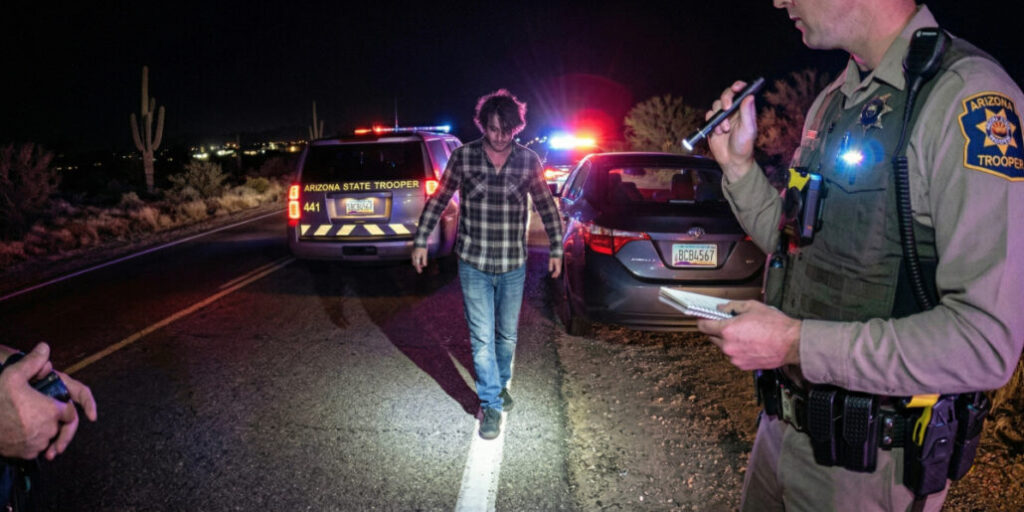
Field sobriety tests are a cornerstone of DUI investigations in Arizona. These tests, ranging from the horizontal gaze nystagmus to the walk-and-turn test, are meant to assess a driver’s physical coordination and ability to follow instructions. The performance in these tests is frequently recorded on body cameras and occasionally even on dash cams.
Why Recorded Sobriety Tests Matter
The video recordings of sobriety tests provide more than just a snapshot of a driver’s condition at the time of the stop. They also document:
- How clearly the officer communicated the testing procedures.
- The environmental conditions under which the test was conducted, including lighting and how congested the area was.
- Any deviations from the standard protocol, which can be critical in assessing whether the test was administered properly.
These recordings can expose confusing bits in the administration of the tests. For example, if the officer failed to properly demonstrate the test or if the test was conducted on an uneven surface, the resulting evidence may be unreliable. Such discrepancies can be pivotal in challenging the case if the defense argues that the test conditions were less than ideal.
Field Sobriety Tests: A Double-Edged Sword
While the presence of footage can bolster a DUI charge if it clearly shows impairment, it can also work against the prosecution in cases where the driver’s performance appears normal. In many instances, an experienced DUI defense attorney will take a closer look at the recordings to pinpoint any tangled issues or subtle differences between the official report and what was actually filmed. These fine points may help the defense argue that the officer’s observations were off-base, especially if the video shows the driver performing the tests correctly.
When Video Evidence Is Absent: The Weight of Officer Testimony
Although video evidence has become increasingly common, it is entirely possible to face a DUI charge without any body camera or dash cam footage. In these situations, the state’s case rests almost solely on the testimony of the arresting officer, chemical test results, and physical examinations.
The Reliance on Traditional Evidence
The absence of recorded evidence means that the officer’s account—and the associated police report—plays a central role. This creates a scenario where the credibility of the officer is critical. Without video to either confirm or dispute the officer’s observations, the case often comes down to whether or not the officer’s narrative appears consistent and believable under scrutiny.
Moreover, when video is missing, even a slight mistake in the officer’s recollection can become a focal point for the defense. A driver facing such a case can argue that, without the backing of recorded evidence, there is reasonable doubt about the accuracy of what was reported. This can be especially powerful if the defense can highlight any twisted or confusing bits in the officer’s testimony.
Legal Strategies in the Absence of Video Footage
Defending a DUI charge that lacks video evidence can be nerve-racking. However, there are several strategies that a seasoned attorney might use when an officer’s testimony is the main pillar of the case:
- Questioning the procedures followed during the traffic stop and the initial interaction with the driver.
- Highlighting any inconsistencies between the officer’s written report and other available evidence, such as the timing of events or chemical test results.
- Emphasizing the possibility that human error could have influenced the officer’s observations.
These approaches underscore the point that even without a body camera’s recording, there can be plenty of room to contest the reliability of the evidence presented by the prosecution.
Challenging Field Sobriety Test Results with Recorded Evidence
One of the most critical aspects of video evidence in DUI cases is its potential to call into question the administration and results of field sobriety tests. Several scenarios can emerge based on how the tests were recorded, and these often form the heart of legal debates in court.
Assessing the Clarity of Test Instructions
If the footage reveals that the officer’s instructions were unclear or that there was a delay in demonstrating how the test should be performed, these can be presented as tangled issues in the procedure. A few common areas to examine include:
- Delays or hesitations in providing clear instructions.
- Interruptions or environmental distractions that could have affected the driver’s performance.
- Differences in the protocol compared to established guidelines from entities such as the National Highway Traffic Safety Administration.
These subtle parts of the recorded test could be the turning point in a case. Even if the footage appears to show some impairment, any deviation from the standard method can be used as a defense argument to cast doubt on the accuracy of the test results.
Environmental Factors Captured on Video
Beyond the individual’s performance, the recording often captures the broader environment in which the tests were conducted. When a field sobriety test is performed on an uneven surface, in poor lighting, or under the influence of other external factors, these conditions can significantly influence the outcome.
By using the video evidence, a skilled attorney can point out the following factors:
- The uneven pavement that might have thrown off balance.
- Illumination problems that made it difficult to perform consistently.
- Loud ambient noise or distractions that contributed to mistakes during the test.
When these factors are brought to light, they compel the court to consider whether the results were truly representative of the driver’s abilities or if they were simply a result of unfavorable conditions. This line of argument is particularly useful when the recorded evidence reveals little discrepancies, making a case for reasoned doubt.
Comparing Officer Reports to Video Footage: Uncovering Discrepancies
A critical use of video evidence in DUI cases is its ability to shine a light on potential differences between what was recorded by the officer in official reports and what actually happened. These discrepancies provide a fertile ground for defense strategies in the courtroom.
Spotting the Small Distinctions in Evidence Records
When the video footage and the officer’s report diverge, the defense can poke around to identify any subtle differences. Consider the following points:
- The officer might indicate that the driver failed to follow instructions, yet the video may show clear adherence to the procedures.
- There could be differences in timing—the report might suggest a delay or hesitation that the footage does not support.
- The recorded environment might contradict claims of adverse conditions that allegedly influenced test performance.
Highlighting these little twists is a key part of many DUI defenses. They allow attorneys to question the credibility of the officer’s account and to argue that if the report and the video are inconsistent, there are ground-level issues that the jury must consider before making a final determination.
Table: Comparing Key Elements of Officer Testimony and Video Evidence
| Evidence Element | Officer Testimony | Video Footage |
|---|---|---|
| Field Sobriety Performance | Driver appeared unsteady, failed tasks | Driver maintained balance; clear instructions given |
| Environmental Conditions | Conditions were adverse; uneven lighting | Footage shows moderate lighting, slight pavement issues |
| Timing of Events | Delayed instructions and responses noted | Immediate and clear interaction captured on camera |
This comparative table highlights how challenging it can be to reconcile discrepancies between a written report and an objective video recording. Even slight differences—they might look like trivial details—can be a game changer in legal proceedings.
Analyzing Chemical Test Procedures Through Recorded Evidence
Not all evidence in a DUI case is reliant on body camera footage. Chemical tests measuring blood alcohol concentration or drug levels also occupy a central role. However, recordings that capture the moments leading up to these tests can offer insight into whether proper procedures were followed.
Reviewing the Process: From Traffic Stop to Chemical Testing
Some departments record more than just the sobriety test—they also capture the process that leads to chemical testing. In these recordings, defense attorneys can identify:
- If the proper chain of custody was maintained.
- Whether the instructions for the test were clearly explained.
- The timing of when the test was administered relative to the arrest.
If the chemical testing process does not align with legal requirements, the recorded evidence may serve as a pivotal factor in challenging the reliability of the test results. This, in turn, can lead to the suppression of evidence or even the dismissal of charges if it is proven that the procedures deviated from the mandated protocols.
Spotting Procedure Missteps on Camera
For instance, if the theory was that a driver’s high blood alcohol concentration automatically proves impairment, the reality might be more complicated. The video might reveal that the testing device was not calibrated correct or that the officer administered the test in a setting that was not conducive to accurate results. These small distinctions can be the key to unlocking a strong defense strategy.
Defense lawyers with experience in DUI cases often use the recorded evidence to question the integrity of the chemical testing process. They point out the fine shades of error—whether it’s a lapse in holding the device correctly or in following the necessary waiting period required by law. By focusing on these tangled issues, they aim to sow reasonable doubt about the prosecution’s evidence.
How Experienced DUI Attorneys Leverage Video Evidence for Defense
Given the potential impact of video evidence, it is super important for anyone facing DUI charges to secure an experienced attorney who can sift through recorded evidence and identify both its strengths and its weak points. A good lawyer will look at every detail—the small distinctions between what was said in the written report and what the camera clearly captures.
Steps Attorneys Take to Examine the Footage
Experienced DUI defense attorneys know they have to work through several stages when examining video footage. Typically, they:
- Review the full recording to ensure no segment of the event has been overlooked.
- Identify any inconsistencies or confusing bits in the officer’s account.
- Assess environmental and procedural factors that could have influenced both the performance of field sobriety tests and the results of chemical tests.
- Gather additional evidence to support discrepancies revealed by the footage.
In doing so, they not only build a robust defense narrative but also protect their client’s rights throughout a process that can often feel overwhelming. For defendants, early action—especially in reviewing recorded evidence—can be key to setting the tone for future negotiations or trial tactics.
Table: Key Defense Strategies Based on Recorded Evidence
| Defense Strategy | How Video Evidence Supports It |
|---|---|
| Questioning Probable Cause | Footage may show no clear violation or reason for the stop. |
| Challenging Field Sobriety Test Protocols | Video reveals if instructions were unclear or improperly demonstrated. |
| Highlighting Environmental Distractions | Recordings capture distractions like uneven pavement, poor lighting, or heavy traffic. |
| Scrutinizing Chemical Test Procedures | Footage may indicate deviations from proper testing protocols. |
This table underscores the various ways video evidence can be harnessed to construct a strong defense in a DUI case. By digging into the subtle parts of recorded events, attorneys can often create reasonable doubt about the accuracy or fairness of the officer’s observations.
Real-World Examples: How Video Evidence Influenced DUI Case Outcomes
Though each DUI case has its unique details, there are several notable scenarios where video evidence has played a pivotal role in the outcome. These examples illustrate both the power and the challenges of relying on recorded footage in legal proceedings.
Case Study: A Dash in Mesa
Imagine a driver in Mesa who was pulled over for allegedly weaving through traffic. The officer testified that the driver was unsteady and could not follow instructions during the field sobriety tests. However, body camera footage later revealed only minor lane changes with no clear violation. The recorded evidence showed that the driver responded appropriately to all instructions and that environmental factors—such as slightly bumpy pavement—may have contributed to the minor lane movement.
After a thorough review of the footage, the defense was able to point out that the discrepancies between what was written in the report and what was recorded introduced enough doubt. Ultimately, the charges were significantly reduced. This case underscores how crucial it is for both the prosecution and the defense to rely on the full record of events.
Case Study: The Tempe Turnaround
In another scenario, a driver in Tempe was facing a DUI based solely on the officer’s testimony. The testimony claimed that the driver was confused and failed to follow simple instructions. However, the body camera recording captured clear and unambiguous interactions. The video showed that the officer’s instructions were, in fact, delivered on time and that the driver was able to understand them adequately.
This clear evidence helped the defense challenge the credibility of the officer’s account. As a result, the case was reexamined, and the charges were downgraded. These real-world examples accentuate the importance of recorded evidence in offering a more balanced view of what truly transpired during an arrest.
Key Considerations for Defendants When Reviewing Video Evidence
For someone facing DUI charges in Arizona, understanding the recorded evidence can be an intimidating process. Yet, knowing what to look for and the potential ways to challenge it is key to mounting an effective defense. Here are several super important considerations:
Factors to Look For in the Footage
- Clarity of Instructions: Was the driver given clear and timely instructions on how to perform field sobriety tests?
- Environmental Conditions: Do the recordings capture details of the environment—such as lighting or pavement conditions—that could have affected performance?
- Officer’s Conduct: Did the officer follow protocol, or were there deviations that could have influenced the outcome?
- Discrepancies in Test Administration: Are there any subtle differences between what was written in the police report and what is seen on video?
Keeping these points in mind, defendants can work with their attorneys to uncover any tangled issues or counterpoints that might help lessen the impact of the charges.
Steps Defendants Should Take Early in the Process
For those charged with a DUI, early action is critical. Here are some steps that can help:
- Request the complete set of video recordings related to the arrest, including dash cam and body camera footage.
- Work with an experienced DUI defense attorney to review the video for any inconsistencies or problematic areas.
- Examine any available chemical test results and ensure that the procedures were upheld according to legal standards.
- Prepare to contest any testimony that significantly diverges from the recorded evidence.
By taking these proactive steps, defendants are better positioned to have a fair review of their case and to develop a robust strategy for court proceedings.
The Future of DUI Defense in an Era of Digital Evidence
As technology marches forward, the role of video evidence in DUI cases is only set to increase. Law enforcement agencies across Arizona and nationwide continue to adopt advanced recording technologies, meaning that recorded evidence will likely become a staple of criminal investigations. This evolution necessitates that both prosecutors and defense attorneys continue to adapt their strategies to deal with the various twists and turns that recorded evidence can present.
Trends in Recording Technology
In the future, we can expect greater standardization in how body cameras and dash cams are used, along with stricter enforcement of policies regarding their operation. Key trends include:
- Enhanced video quality that offers clearer insights into what happened during traffic stops.
- Improved storage and retrieval systems ensuring that all footage is preserved and easily accessible during legal proceedings.
- More comprehensive training for officers that focuses on both administering field sobriety tests and recording all pertinent details accurately.
With these trends, the recorded evidence not only becomes more reliable but also more precise in capturing the subtle details and little differences that may be crucial to a DUI case. For defense attorneys, this translates into a continually evolving set of evidence to study—and to challenge if necessary.
Balancing Technology and Human Judgment
Even as technology provides a super important supplement to traditional forms of evidence, the human element remains crucial. Officers’ observations, despite being recorded, are still subject to interpretation. The final judgments in DUI cases will always have a degree of human discretion, which must be balanced against the recorded facts.
Thus, the future of DUI defense will likely involve a careful balancing act—one in which both the objective evidence captured by technology and the subjective assessments made by law enforcement are given their due consideration. This balancing act will define how convictions are either solidified or called into question in the coming years.
Final Thoughts: The Importance of Informed Legal Representation
In summary, the infusion of video evidence in DUI cases has fundamentally changed the legal terrain for drivers facing charges in Arizona. While the recorded footage offers an objective view of events—from the moment of the traffic stop to the execution of field sobriety tests—it can also introduce several tricky parts into the legal process. Discrepancies between the video evidence and the officer’s written report, unclear test instructions, and environmental factors all contribute to a scenario where every detail matters.
Whether you are confronted with a DUI charge backed by video evidence or one that relies solely on officer testimony, having an experienced attorney by your side is super important. A skilled lawyer can help you work through the tangled issues, identify the small distinctions that matter, and ultimately steer through the legal process to protect your rights.
For defendants who might feel overwhelmed by the nerve-racking examination of their case, understanding what video evidence can and cannot prove is the first step toward mounting an effective defense. By taking a closer look at the recorded evidence early on, you can set the stage for a fair legal process—and possibly even a better outcome in your case.
Key Takeaways for DUI Defendants
To wrap up, here are the major points to consider when faced with a DUI charge in the digital age:
- Recorded evidence, especially from body cameras and dash cams, is now a central component of DUI investigations.
- Even if the evidence appears damaging at first glance, an experienced attorney can often dig into those hidden complexities to uncover discrepancies that work in your favor.
- Absence of video evidence does not automatically exonerate a defendant—the traditional evidence provided by officers still plays a huge role in court.
- Environmental factors and deviations from standard procedures recorded on video can introduce enough doubt to challenge the prosecution’s case.
- Early and proactive legal representation is critical for navigating the maze of evidence that modern DUI cases present.
The rise of digital evidence in DUI cases forces everyone—from law enforcement officials to defense attorneys—to constantly adapt and refine their approaches. As both sides work through the tricky parts of recorded testimony and officer reports, the underlying goal remains the same: ensuring that justice is served with fairness and accuracy.
For anyone facing the uncertainties that come with DUI charges, it is super important to remember that every case is unique. Whether recorded evidence casts a clear light on the events or introduces several complicated pieces, a skilled attorney can help figure a path through the legal maze and work toward a resolution that safeguards your future.
Read more about this topic at https://arjashahlaw.com/criminal-defense/video-evidence-body-cameras-using-footage-in-a-dui-case-in-arizona/
Related articles you might like
Video Evidence – Bureau of Justice Assistance
A look at how audio and video evidence is transforming …
